Why Does My Irrigation Intake Keep Clogging?
You’ve cleaned the intake screen. Water is moving again, and your irrigation system is back on schedule. Then the same problem returns—and your crew is pulled away from other work to deal with another clog.
For golf course superintendents and other irrigation managers, this cycle can become a frustrating part of routine maintenance. But frequent clogging deserves a closer look. What’s collecting on the screen, and why does it keep coming back?
The answer may have as much to do with the intake’s location as the screen itself.
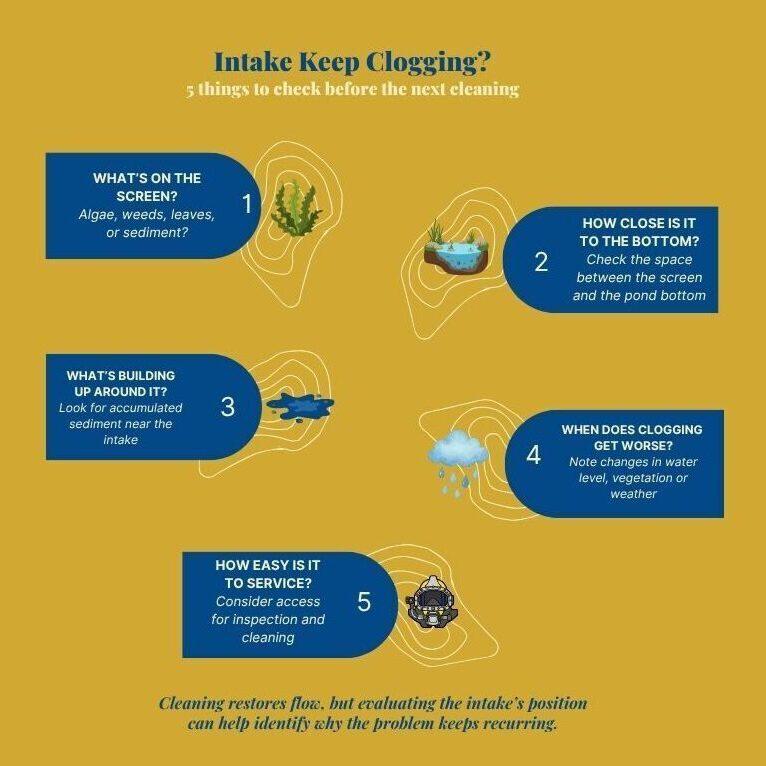
What’s Collecting on Your Intake Screen?
Ponds and lakes contain sediment, aquatic vegetation, and organic debris. An intake screen helps keep larger material out of the intake line, but that material can accumulate on the screen and restrict water flow.
Common contributors include:
- Algae and aquatic weeds: Plant material can collect against the screen.
- Leaves and organic debris: Leaves, grass clippings, and decomposing vegetation can contribute to buildup.
- Sediment: Sand, silt, and other bottom material can become a problem when the intake is positioned too close to the pond bottom.
Identifying what’s collecting is an important first step. A screen covered in weeds may call for a different approach than an intake surrounded by accumulated sediment.
Your Screen’s Location May Be Part of the Problem
An intake that originally had adequate clearance can face different conditions as sediment accumulates around it. Over time, the screen may sit closer to the bottom material you want to keep out of your irrigation system.
Intake placement requires a balance: the screen should remain submerged, with separation from bottom sediment and floating debris. Extension guidance identifies this separation as an important consideration when drawing irrigation water from a pond.
Could a Floating Intake Help?
When an intake’s proximity to bottom sediment is contributing to the problem, a floating intake screen may be worth considering.
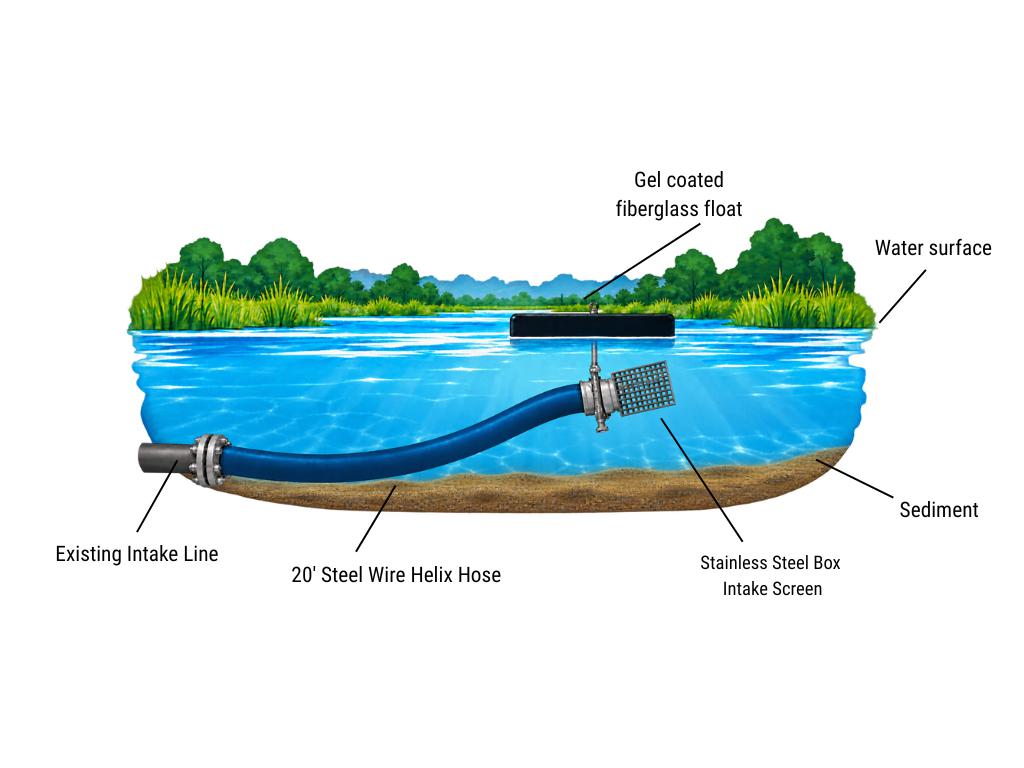
AUS FloatFlow connects to an existing intake line through a hose. A floating assembly holds the screen below the water’s surface and away from bottom sediment, moving with changing water levels.
Instead of keeping the screen in a fixed position near the pond bottom, this arrangement allows it to remain suspended closer to the surface. It also places the screen in a more accessible position for inspection and service.
AUS FloatFlow is designed to help address sediment exposure and service access. Like any intake screen, it still requires inspection and maintenance. The appropriate setup depends on the existing intake, pond conditions, water-level range, and irrigation system requirements.
Find the Right Approach for Your Pond
Recurring intake clogs are a reason to evaluate the conditions around your intake. Depending on what’s causing the buildup, the next step may involve cleaning, vegetation removal, sediment removal, a change in intake position, or a combination of services.
AUS Dredge and Dive brings commercial diving, intake cleaning, and dredging experience to that evaluation. With AUS FloatFlow, we offer another option for keeping intake screens away from bottom sediment and more accessible for service.
Tired of dealing with the same clogged intake? Contact AUS Dredge and Dive to discuss your current setup and whether AUS FloatFlow could be a good fit.