


Lake Dredging Services
When excess sediment builds up, it can choke a lake’s depth, cloud the water, disrupt aquatic life, and reduce its value for recreation or irrigation. Lake dredging is often the most effective way to reverse years, even decades, of decline.
At AUS Dredge Dive, we specialize in lake dredging and sediment removal services that restore depth, clarity, and beauty to lakes, ponds, marinas, and reservoirs. Over time, silt, muck, and organic debris accumulate, causing shallow water, algae blooms, and declining aquatic health. Without intervention, these problems worsen, limiting recreation, reducing property values, and damaging ecosystems.
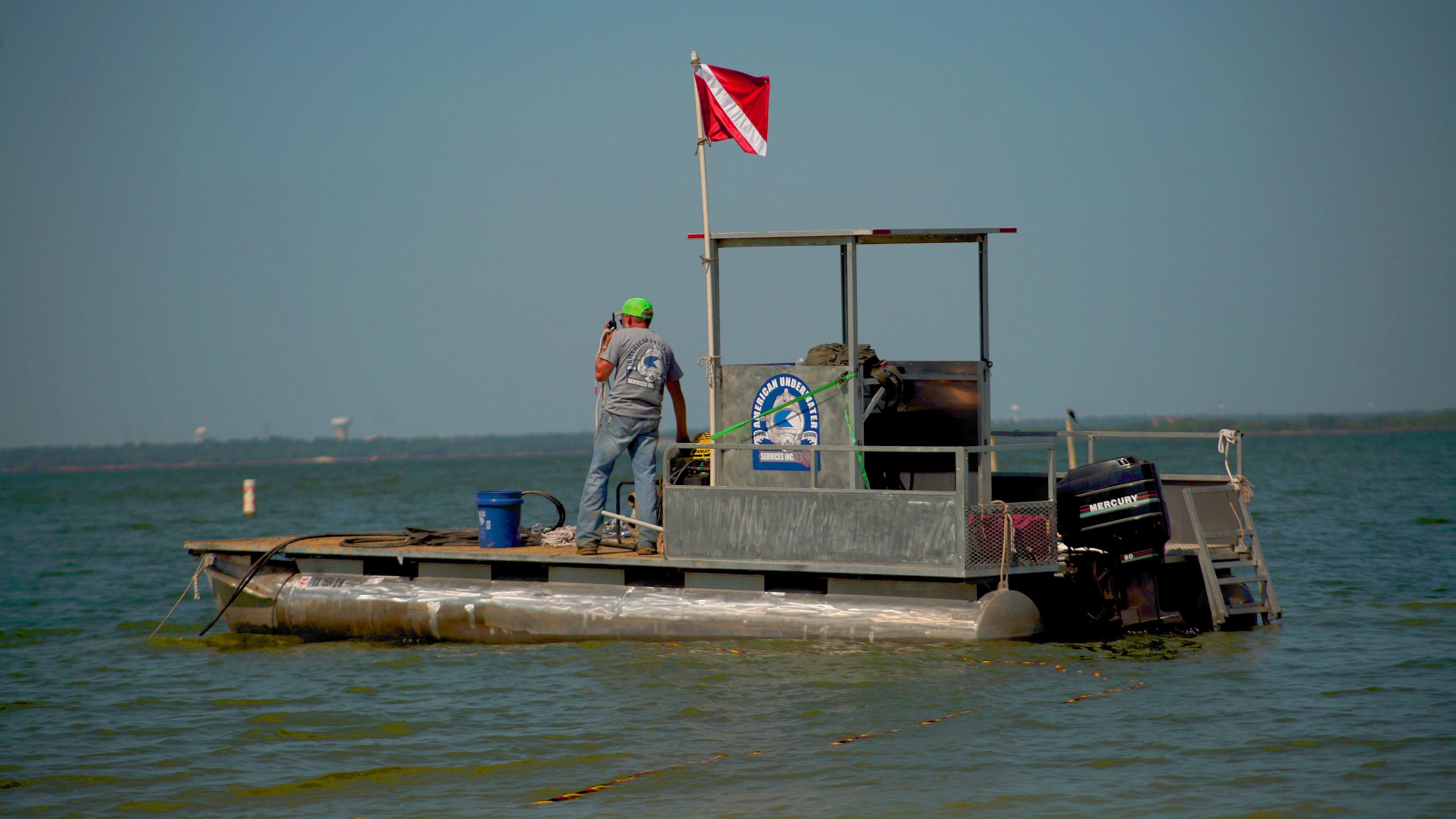
Our team approaches every dredging project with care, especially in residential and recreational environments. We prioritize environmental sensitivity and visual impact, maintaining clean, orderly work zones with minimal disruption to the shoreline.
With over 26 years of experience, we’ve built a reputation for delivering efficient, environmentally responsible dredging services that restore and revitalize lakes across the region and nationwide. We serve lakefront property owners, HOAs, municipalities, marinas, industrial parks, and conservation districts.

Lake Dredging FAQS
Yes. AUS Dredge & Dive provides dredging services nationwide across the contiguous United States, depending on project scope, logistics, and scheduling. If you’re outside Texas, we’ll confirm site requirements and the most efficient approach during the scoping process.
Not always. Many dredging projects can be completed with the pond partially full or fully in water, depending on access and method. In some cases, lowering the water level improves efficiency or reduces cost. AUS evaluates your site conditions and recommends the approach that protects the property, meets project goals, and keeps operations practical.
Minimum project size depends on location, access, and scope rather than pond size alone. Some smaller projects are feasible when access and logistics are efficient, while others may require a larger scope to be cost-effective. AUS evaluates each site individually and will recommend the most practical approach.
Permit requirements vary by location and project type. Some dredging work requires permits, while other projects may not. AUS helps identify likely permitting considerations early, including environmental constraints and access limitations, so the project can be scoped appropriately. If permits are required, timelines and documentation needs are factored into planning.The need for permits is dependent on the project type and location. Not all dredging work requires one. Early on, AUS assesses permitting factors, such as environmental restrictions and access constraints, to ensure appropriate project scoping. When permits are necessary, AUS incorporates the required timelines and documentation into the planning process.
The dredging process typically includes site evaluation, scope definition, method selection, permitting review (if required), mobilization, dredging and dewatering, material handling and disposal, and site restoration. AUS manages each phase with safety, efficiency, and clear communication to minimize disruption and avoid surprises.
Dredging timelines depend on sediment volume, equipment access, dewatering time, weather, and disposal logistics. Small ponds can take days, while larger lakes or complex sites may take weeks. After evaluating the site, AUS provides a realistic schedule that accounts for production rates, dewatering, hauling, and site restoration needs.
Yes. Routine programs can include inspections, sediment monitoring, vegetation control, and proactive maintenance to reduce emergency issues and extend the time between major dredging projects. A planned approach can help keep budgets predictable and reduce the risk of sudden capacity loss or water-quality problems.
Contact AUS with the waterbody location, the main issue (loss of depth, muck buildup,cattails, access concerns) and any photos or prior reports. AUS typically starts with a scoping call and may recommend a site visit to confirm conditions. Once the scope is defined, you’ll receive a clear project approach and budget framework.