


If you oversee a wastewater lift station, irrigation system, municipal utility, industrial facility, or commercial water system, here’s a crucial, but often overlooked question:
When was the last time your wet well was cleaned?
If you find yourself hesitating to answer, that’s a sign: it’s probably overdue. Wet wells aren’t glamorous.They’re out of sight, buried below ground, and easy to forget. But when they fail, the impact can be dramatic resulting in anything from pump breakdowns to environmental violations and costly emergency repairs.
What Is a Wet Well—and Why It’s Critical
A wet well is a below-ground holding chamber that stores wastewater or irrigation water before pumps move it onward. In many systems, it works alongside intake screens that filter water at the source.
Over time, wet wells collect:
- Sediment, silt, and sand
- Grease, fats, and oils
- Rags and debris
- Organic buildup
- Corrosive gases
Without Regular Cleaning, this buildup:
- Reduces pumping efficiency
- Restricts flow
- Damages equipment
- Increases odor issues
- Raises the risk of system failure
These are the same concerns highlighted in AUS Dredge & Dive’s golf course wet well article, where sediment and intake blockages can cascade into costly irrigation downtime or pump strain if ignored.
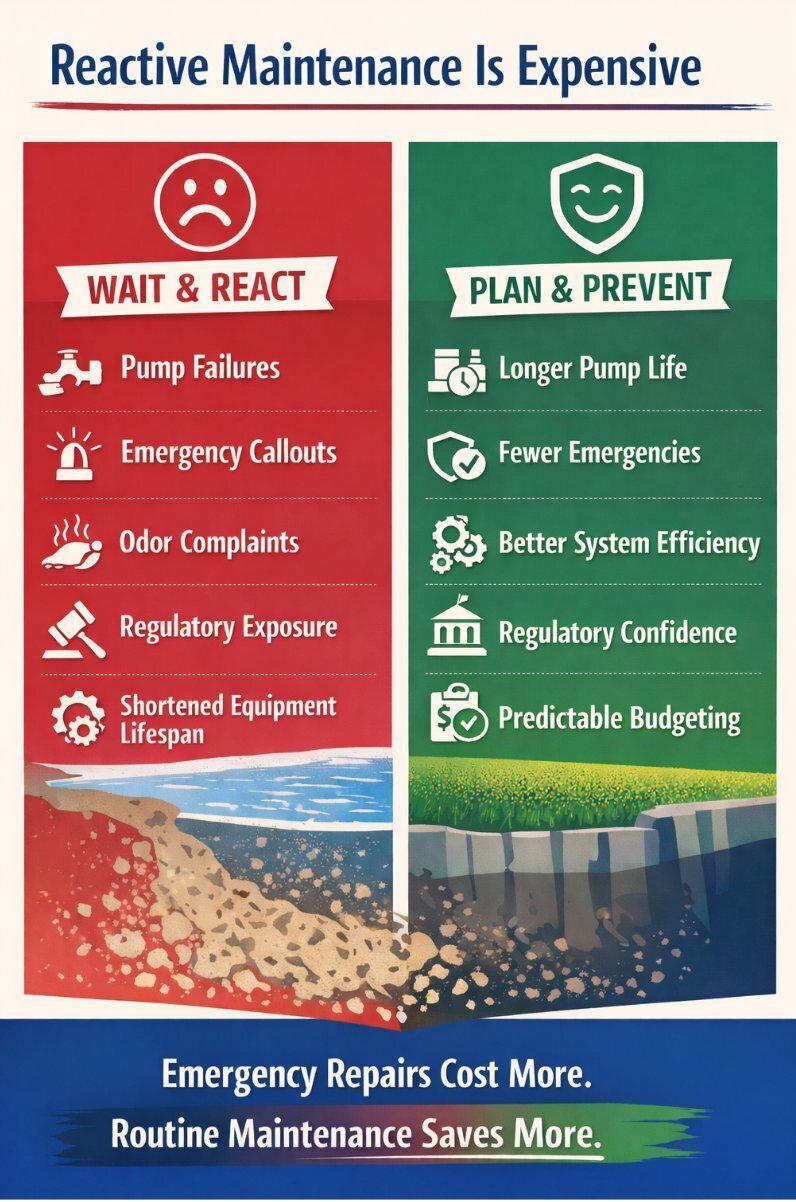
Why Preventative Maintenance Beats Reactive Repair
Failing to maintain a wet well doesn’t just risk equipment, it jeopardizes your entire system.
Protect Your Investments
Scheduled wet well maintenance cleanings catch buildup before it becomes a hazard. Pumps operating with clogged intakes work harder, wear faster, and fail sooner. Routine wet well cleaning extends the life of expensive assets.
Avoid Emergency Callouts
Emergency repairs often cost several times more than scheduled maintenance. This AUS article outlining the importance of golf course pond maintenance points out how failures during peak seasons can force last-minute fixes that cost both time and money.
Minimize Operational Downtime
Blocked intake screens or buildup in wet wells can slow or stop flow entirely. For irrigation systems, that means brown patches and turf loss. For wastewater stations, it can mean alarms, backups, and compliance issues.
How Often Should You Clean Your Wet Well?
There’s no one-size-fits-all answer, but common best practices include:
✔ Annual inspections
✔ Routine cleanings every 6–12 months
✔ More frequent service in high-debris environments
Buildup starts slowly but accelerates over time. Unchecked sediment and organic matter may not cause immediate failure, but they silently erode performance and increase repair costs.
Signs Your Wet Well Needs Immediate Attention
Watch for these red flags:
- Reduced flow or low pressure
- Unusual pump cycling
- Alarms triggered by level sensors
- Visible debris near intakes
- Unpleasant odors
These signs mean the system is already stressed. Preventative maintenance before these symptoms appear is always more effective.
The Wet Well Professional Advantage: Commercial Diving & Cleaning
Some wet well cleaning can be done with vacuum trucks or surface tools. However, many facilities require specialized techniques, especially where:
- Debris has settled along walls or in deep basins
- Intake screens are submerged
- Confined-space hazards exist
- Access is limited
That’s where professional commercial diving teams excel. AUS Dredge & Dive offers:
- professional wet well cleaning team
- De-silting and sediment removal
- Pump station cleaning
- Intake screen servicing
- System inspection and optimization
A preventative maintenance strategy keeps systems operating smoothly so failures don’t dictate your schedule.
From Reactive to Proactive: A Better Maintenance Mindset
Routine maintenance transforms your water system from a liability into a reliable asset. Instead of reacting to failures, you’re preventing them.
Ask yourself:
Is your last wet well cleaning in the rearview mirror? Or planned on your calendar?
If it’s the former, your system is already at risk.
Take the Next Step to Service Your Wet Well
Don't wait for a crisis to validate the importance of wet well maintenance.
- Schedule a wet well inspection.
- Plan regular cleanings.
- Protect your equipment, your operation, and your reputation.
Our professional wet well cleaning and inspection services keep your system performing at its best — long before the alarms start blinking.
To Learn more about our Wet Well Services Call AUS today (817) 377-8512 | or Request a Quote Online


