How Much Does It Cost to Dredge a Pond? 6 Key Factors That Affect Pricing
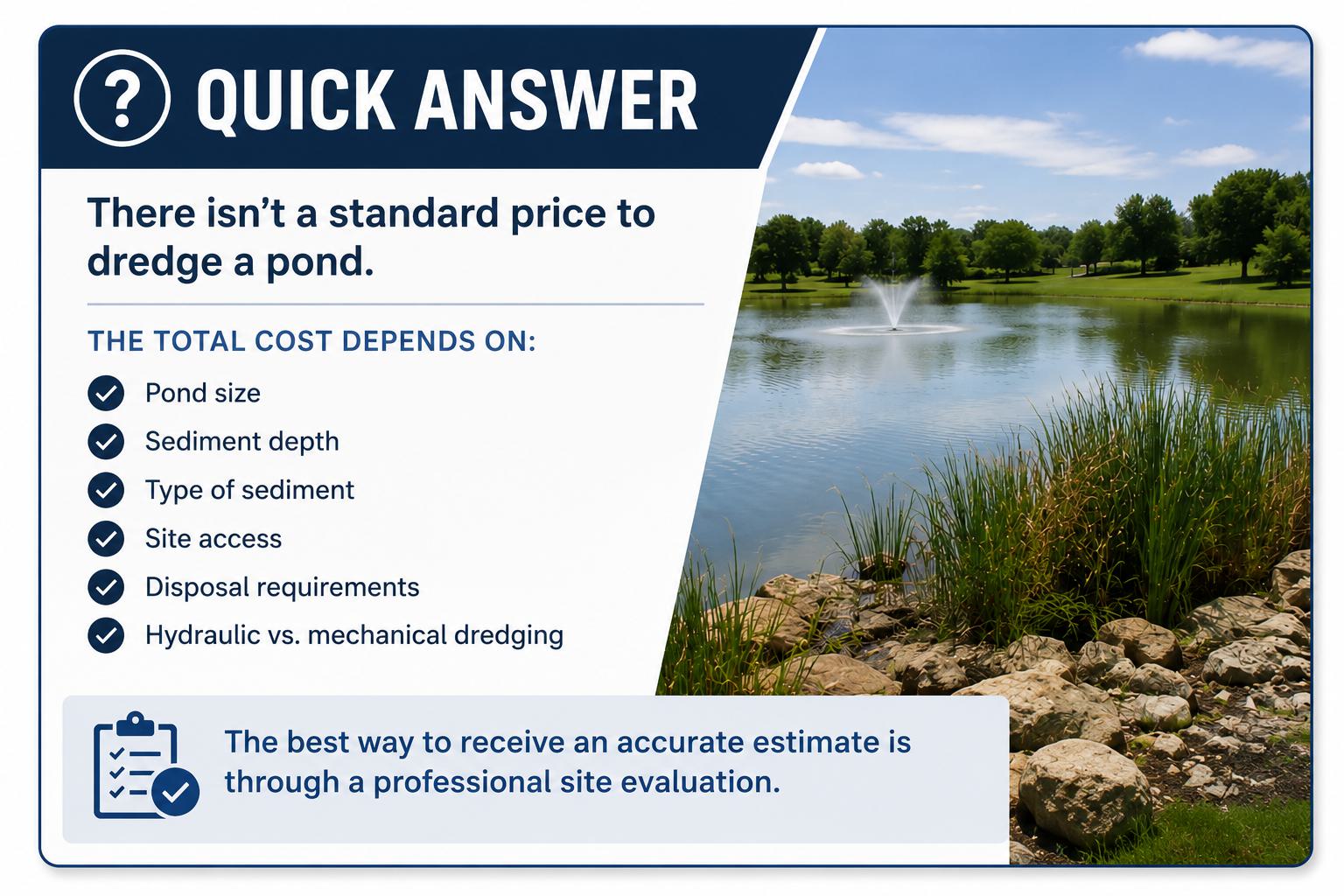
The single most common question we receive at AUS Dredge and Dive is, "How much does it cost to dredge a pond?" The answer is always: it depends.
Dredging is not a fixed-price service like buying a bag of fertilizer. Because every waterbody is unique—with varying depths, sediment types, and logistical hurdles—the cost of a dredging project is highly variable. To help you budget and plan effectively, we'll break down the six primary factors that determine the final cost and explain the techniques that can influence the overall value of the investment.
What is Dredging?
Dredging is the process of mechanically removing accumulated muck, silt, and organic sediment from the bottom of a body of water, such as a lake or pond. This accumulation, which acts as a primary food source for nuisance algae and aquatic weeds, reduces water depth and capacity over time. By physically extracting this material, dredging restores the waterbody's original volume, improves water quality, and eliminates the nutrient-rich sediment that fuels chronic water quality problems. Dredging is the most effective and long-lasting method for managing aquatic ecosystem health and preventing future issues such as flooding and severe algal blooms.
With that said, let’s go over six factors that determine cost.
1. Volume and Depth
The most significant factor influencing cost is the volume of material that needs to be removed. This is where the depth of the muck, not just the depth of the water, becomes crucial.
Sonar Mapping:
Before a dredging project begins, sonar mapping can significantly improve cost estimates and project planning. AUS SonarVision uses sonar technology to map pond bottom contours and measure sediment depth, giving contractors the data needed to estimate sediment volume, identify problem areas, and define project scope with far more accuracy than a visual inspection alone. Sonar mapping isn't necessary for every dredging project, but it's especially valuable for larger ponds, variable sediment conditions, or projects where precise volume calculations are critical to budgeting.
Muck Density: Dredging costs are influenced not just by depth, but by material type. Dense, compacted silt can take longer and require more power to remove than deeper deposits of soft, "soupy" sludge. While greater volumes increase production time and disposal needs, softer material is often faster and more cost-effective to dredge per cubic yard. Sonar mapping can also help identify these density variations across a pond before work begins, so estimates account for the mix of material rather than an average depth alone.
2. Site Logistics and Accessibility
Where your pond is located and how easily the equipment can access it dramatically impact labor and mobilization costs.
Access Points: Can a hydraulic dredge be driven right up to the pond's edge, or does equipment need to be craned over buildings and fences? Limited access - especially in urban or HOA environments can significantly increase project complexity and cost.
Dewatering Space: Once dredged, the wet material must be dried. Is there sufficient space on-site to establish a dewatering area or place geotextile bags? A lack of space for dewatering means material must be pumped or hauled further, adding cost to the project.
3. Sediment Composition and Disposal
Volume - not just water depth - is the primary driver of dredging costs. The makeup of the sediment (sand, clay, leaves, debris, etc.) is a factor in determining dewatering time, potential environmental testing, and the final disposal costs.
- Dewatering Time: Sandy or gravel-type materials dry quickly. Sludge or organic muck (the primary food source for algae) retains water much longer. The longer the material takes to dry, the longer it occupies the dewatering area, and the more follow-up labor is required for monitoring.
- Environmental Testing: Regulations may require laboratory testing of dredged material, particularly in stormwater ponds, to assess heavy metals and other contaminants. If the material is classified as hazardous, disposal fees will be assessed.
- Disposal Strategy: Disposal is typically one of the most unpredictable and expensive components of a dredging project. Dredging companies with established networks and advanced dewatering capabilities are better able to mitigate the high fees associated with hauling overly saturated material.
Efficient dewatering directly reduces the total cubic yardage hauled, resulting in savings on landfill disposal fees and trucking costs.
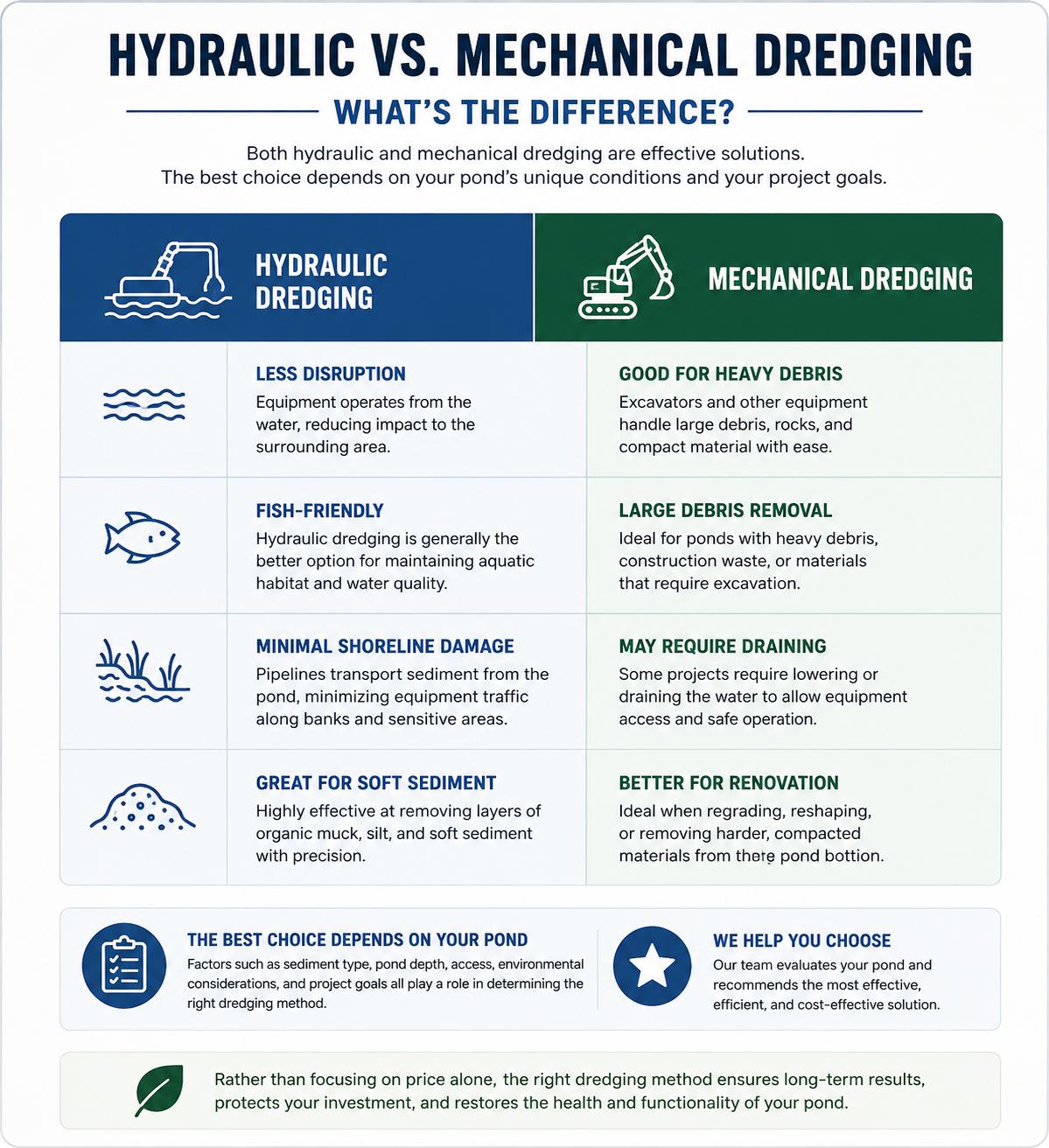
4. Dredging Methods and Equipment
5. Dredging Permitting Fees and Compliance Costs
Dredging is an environmentally sensitive process that requires proper permitting to protect surrounding ecosystems. These regulatory requirements add a necessary layer of cost.
Permitting Fees : Depending on your state, county, and the size of your waterbody, you may need permits from agencies like the U.S. Army Corps of Engineers (USACE) or state environmental departments. The fees can vary widely, and the approval process can take months, which must be factored into your timeline.
Environmental Consulting: Reputable companies often work closely with environmental engineers to ensure the project plan is compliant, particularly with respect to turbidity (water cloudiness) control during operation and the safe return of water after dewatering.
6. Project Complexity and Water Control
Any required pre-project work or unexpected site conditions will add to the budget. Projects that require temporary drawdown, bypass pumping, or flow control can add complexity and cost.
Unexpected Obstacles:
Dredging projects can uncover large, submerged construction debris that creates unforeseen challenges. Addressing these conditions may require additional time, specialized equipment, or trained experts—such as AUS commercial divers—to safely resolve the issue.
How AUS Estimates Pond Dredging Projects
Every pond is different, which is why we don't believe in one-size-fits-all pricing. Our estimating process is designed to evaluate your pond's unique conditions so we can recommend the most effective dredging solution and provide an accurate, customized proposal.
1. Initial Consultation
We begin by discussing your pond, the challenges you're experiencing, and your goals for the project. Whether you're dealing with sediment buildup, algae, reduced water depth, or stormwater concerns, we'll gather the information needed to determine the next steps.
2. Site Evaluation
When appropriate, our team visits the site to assess the pond's size, access, surrounding conditions, and any features that may affect the project. This allows us to better understand the scope of work and identify any potential challenges.
3. Sediment Assessment
We evaluate the amount and type of accumulated sediment, along with overall pond conditions. Understanding sediment depth and composition helps determine the most efficient removal method.
4. Dredging Method Recommendation
Based on our findings, we'll recommend either hydraulic dredging, mechanical dredging, or another appropriate solution. Our recommendation is based on what's best for your pond—not a one-size-fits-all approach.
5. Sediment Management Plan
We'll discuss how removed sediment will be dewatered, handled, and disposed of in accordance with project requirements and environmental considerations.
6. Detailed Proposal
You'll receive a clear proposal outlining the recommended scope of work, project approach, and estimated timeline so you know exactly what to expect before work begins.
7. Project Scheduling
Once the proposal is approved, we'll coordinate scheduling with your team to complete the project efficiently while minimizing disruption to your property or operations.
Our goal is to make the estimating process straightforward, transparent, and tailored to your specific needs. By taking the time to understand your pond before recommending a solution, we can help ensure a successful dredging project from start to finish.
Why Experience Matters
Choosing the right dredging contractor is about more than equipment—it's about experience. Every pond presents unique challenges, from varying sediment conditions and site access to environmental considerations and project goals. An experienced team can identify the most effective solution while minimizing disruption and avoiding costly mistakes.
For more than 26 years, AUS Dredge & Dive has helped property owners and organizations restore and maintain ponds, lakes, and other water bodies throughout Texas and the surrounding region. Our team has successfully completed projects for a wide range of clients, including:
- Homeowners Associations): Restoring community ponds, improving water quality, and maintaining stormwater retention systems.
- Municipal Dredging: Supporting parks, public lakes, retention ponds, and other public water infrastructure with safe, efficient dredging solutions.
- Golf Courses Pond: Maintaining irrigation ponds and water features to improve appearance, functionality, and long-term performance.
- Industrial Retention Ponds: Removing sediment from process ponds, settling basins, and other operational water bodies to help maintain efficiency and compliance.
- Private Landowner Ponds: Restoring farm ponds, ranch ponds, recreational lakes, and private water features for improved depth, water quality, and enjoyment.
Every pond is different, which is why the most accurate way to estimate dredging costs is through a professional site evaluation. Whether you manage an HOA, golf course, industrial facility, municipality, or private property, our team can evaluate your pond, recommend the right dredging method, and provide a customized proposal with no surprises.
Request a quote today to learn how AUS Dredge & Dive can help restore your pond's depth, water quality, and long-term performance.